
Beyond the FIFA World Cup: How iGaming operators can benefit from the 2026 sports calendar
1 min readBeyond the FIFA World Cup: How iGaming operators can benefit from the 2026 sports calendar
Although the 2026 FIFA World Cup has dominated the industry’s attention, it is only one chapter in what is developing into one of the busiest sports calendars in recent years.
For operators, the real opportunity does not lie in a single tournament, but in maintaining player engagement through a continuous stream of premium events. The UEFA Champions League starts in July, followed by the start of national football leagues across Europe and the UEFA Super Cup in August. Tennis adds an important extra audience draw, with Wimbledon also expected this year to attract substantial betting activity throughout the summer.
Now that competition in regulated markets such as the Netherlands is increasing, operators are increasingly focusing on maximizing engagement during these peak moments, while maintaining sustainable player activity throughout the year.
Sports betting continues to outperform the market
The latest forecast from Track360 estimates that global iGaming gross gaming revenue (GGR) will reach $115 billion in 2026, an increase of 12% compared with $103 billion in 2025.
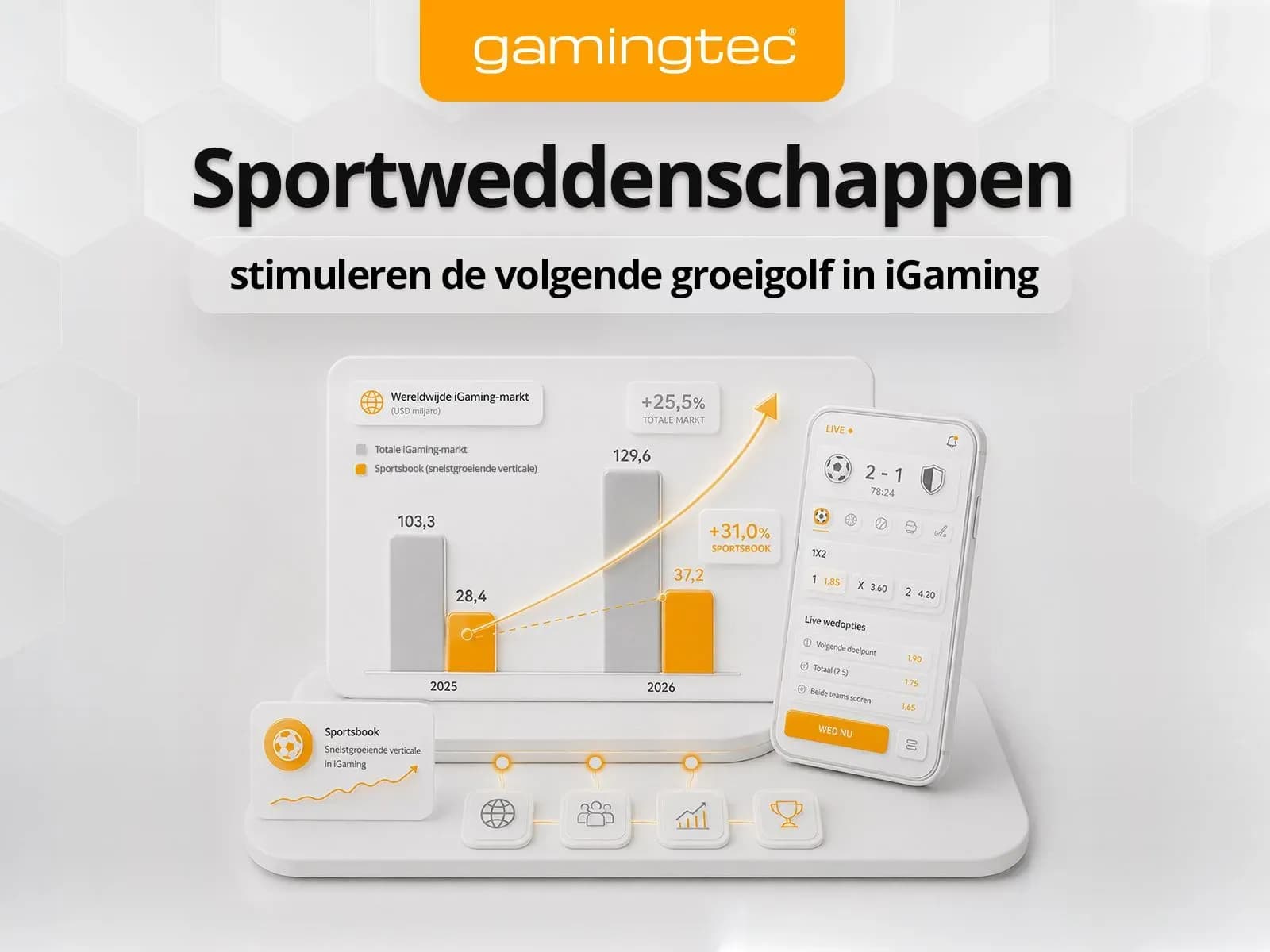
Although online casinos remain the largest segment with revenue of approximately $59.8 billion, sportsbooks are the fastest-growing segment. Sports betting is expected to generate $40.3 billion worldwide in 2026, with year-over-year growth of 14%, thereby surpassing every other major iGaming segment.
The growth of sports betting is driven not only by regulatory expansion in markets such as the United States and Brazil, but also by a shift in player expectations. Modern gamblers are increasingly making use of interactive formats, live betting and personalized promotions that go far beyond traditional pre-match wagers.
As wagering products become more similar to each other, operators increasingly compete through available content, personalized promotions, and betting tools.
The evolution of the modern sportsbook
Players expect more interactive and tailored betting experiences that go beyond traditional match outcome predictions. Features such as advanced bet builders, pre-built accumulators, in-depth player statistics, and dynamic promotions are becoming increasingly central to engagement strategies.
'The biggest trend is the growing demand for betting formats with higher margins and more interactivity, such as advanced bet builders and pre-constructed accumulators, combined with dynamic promotions that keep players actively engaged,' said Rikesh Lowtoo, Director of Product at Gamingtec. 'We also see increasing interest in prediction markets and a clear shift towards more entertainment-driven betting. Players are looking for fun, engaging ways to interact with sports beyond traditional outcomes.'
This shift is particularly relevant during high-profile events, where operators not only compete on odds, but on the overall betting experience.
In addition to product innovation, artificial intelligence is an important driver of the evolution of sportsbooks.
Operators are increasingly using AI-driven tools and behavioral analytics to personalize promotions, segment target groups, and optimize engagement strategies in real time. Instead of running broad campaigns, sportsbooks are moving toward tailored experiences that reflect players' individual behavior.
This is particularly important now that acquisition costs in regulated markets continue to rise. The ability to improve retention through personalized engagement will become a core competitive advantage rather than a secondary option.
Why technology is crucial during peak events
Major sporting events place enormous pressure on sportsbook infrastructure. Traffic volumes can increase dramatically within minutes after crucial match moments, creating significant challenges for platform performance and stability. In highly competitive regulated markets, even brief disruptions can have a direct impact on player retention and revenue generation.
'Performance and stability are often underestimated,' said Lowtoo. 'During major events, when traffic spikes dramatically, even small delays or instability can lead to lost bets, frustrated players, and damaged trust. Robust uptime and fast response times under load are non-negotiable for a positive player experience.'
Now that players' expectations continue to rise, operators need technology that supports both scalability and flexibility.
A turnkey iGaming platform for stable growth
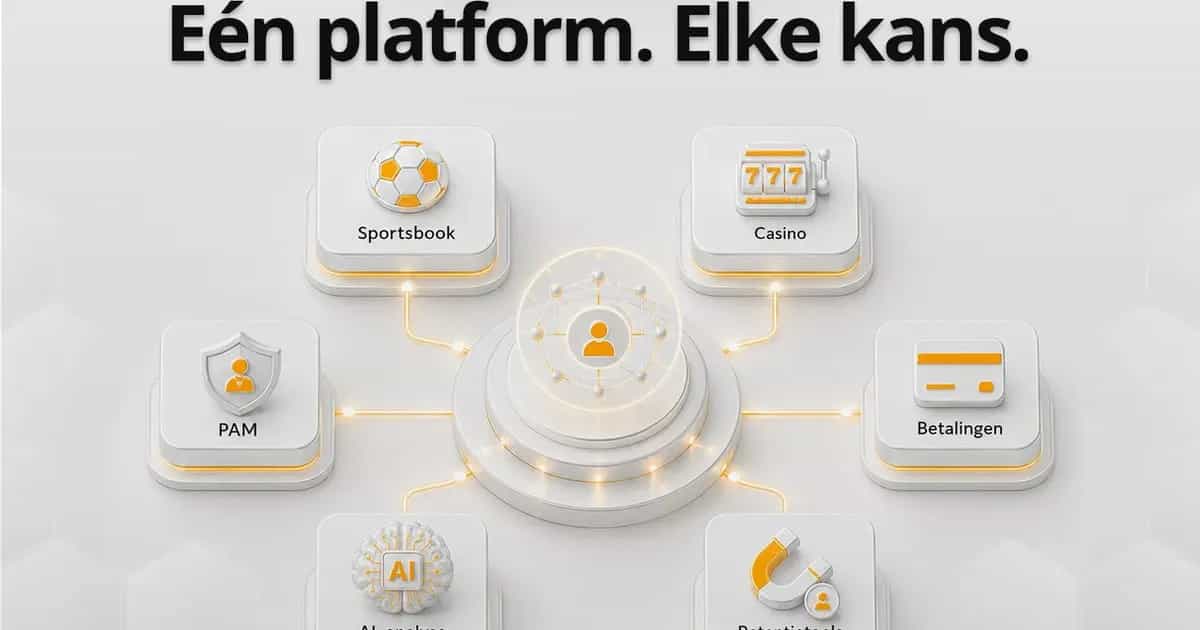
This is where a platform like Gamingtec comes into play, with a complete turnkey iGaming solution that combines sportsbook, casino, player account management, payments, retention tools and compliance-ready infrastructure within a single platform.
To support this level of engagement, modern sportsbook infrastructure must combine bandwidth, speed and stability at scale. Gamingtec’s sportsbook is powered by real-time odds and data feeds and supports more than 480,000 pre-match events, enabling operators to remain competitive during global demand spikes. It provides coverage for more than 125 sports, 34 esports disciplines and more than 5,000 daily virtual sports events, ensuring ongoing engagement even beyond major tournaments.
Just as important is how this content is managed and monetized. The platform includes automated, AI-driven risk management in addition to a fully managed sportsbook infrastructure, enabling operators to maintain trading stability and operational efficiency even during periods of extreme traffic volatility. In practice, this means that operators not only can expand the number of events they can offer, but also improve their ability to monitor margin, exposure, and performance in real time.
The sportsbook solution from Gamingtec includes advanced bet builders, pre-built accumulators, and promotional tools designed to support both player acquisition and long-term retention. Operators can customize betting content, bonuses, and player journeys to align with local market preferences and business objectives.
The Player Account Management (PAM) system from Gamingtec serves as the operational core of the platform and centralizes registration, wallets, payments, segmentation, and bonus management. AI-driven analytics and behavioral insights help operators identify game trends, optimize promotional spending, and make data-driven decisions based on real-time player activity.
The platform also integrates a full casino offering, enabling operators to diversify revenue streams beyond sportsbook activity. By combining sportsbook and casino activity within a single ecosystem, operators can create a more resilient business model that is less dependent on seasonal traffic fluctuations.
Look beyond the headlines
The most successful operators are rarely those that focus on a single tournament.
As the 2026 sports calendar unfolds, opportunities will continue to extend far beyond the World Championship—ranging from UEFA Champions League matches and national football leagues to Wimbledon and other global events. With expected sportsbook revenue of $40.3 billion worldwide in 2026, making it the fastest-growing segment in iGaming, the commercial opportunity is clear.
With Wimbledon, the UEFA Super Cup, Champions League qualifying matches and dozens of other high-profile events still to come, the commercial opportunity is already on the calendar. The challenge is to have the technology, flexibility, and engagement tools needed to seize this opportunity.



Comments9
Gaan ze met AI ook echt retentie verbeteren, of is het vooral marketing-saus? In gereguleerde markten waar acquisitie duur is, moet je wel iets slims doen. Anders blijft het bij "personalized promos" en dat is meestal gewoon hetzelfde met een ander sausje. 💯
Wimbledon + nationale competities + UCL in juli tot augustus overlap = banger aan content. Maar imo het gevaar is dat er vooral op volume gemikt wordt in plaats van op kwaliteit en relevantie. Voor PSV fans zou ik dan willen zien hoe ze wedstrijdmomenten koppelen aan echte engagement, niet alleen meer events tellen.
"Robuuste uptime en snelle responstijden onder belasting zijn ononderhandelbaar" 100% correct. If the platform is mid when the match is peak, it's basically a lost bet and lost trust in one go. 🔥⚽
Funniest part is the focus on bet builders and personalized promos. For us it means more people tracking player stats and form, so if PSV players dont deliver, the engagement drop is immediate... no cap. 🤡
"Prestaties en stabiliteit worden vaak onderschat" - 100% mee eens. Als je tijdens piekmomenten lag krijgt, ben je je wedders kwijt binnen seconden. Operators die dat onderschatten, verdienen gewoon die frustratie van spelers. 👀
"UEFA Champions League begint in juli" yeah and then it's nonstop. But can they actually handle load spikes when key PSV minutes go live? one tiny delay and everyone switches apps instantly, imo.
480.000 vooraf-wedstrijdevenementen klinkt echt insane, maar ook wel logisch als ze 125 sporten + 34 esports pakken. Toch blijft de vraag: krijg je dan niet te veel prikkels en word je als speler juist uitgeput? bij PSV wedstrijden wil ik juist snelheid en stabiliteit, niet een overload.
Tbh this "football calendar never stops" angle sounds nice for iGaming, but it also means people will be watching PSV way more in the build-up. Wenn operators can keep odds and live markets snappy during CL group nights, thats where it hits.
Denk dat ze vooral gelijk hebben over de kalender, maar tbh ik zie nog weinig link met PSV zelf. Als die "live en personalized promoties" echt werken tijdens Champions League, dan kan dat wel publiek trekken. Alleen ben ik benieuwd hoe ze dat doen zonder dat het cringe wordt.